When truth returns, why do stories remain?

PHOTO CREDIT: Henry Hartmann-Unsplash
Civil Commitment, Institutional Narrative, and the Restoration of Relationship.
Or perhaps the question is: What is really down the rabbit hole?
What began as an attempt to understand how an unwarranted civil commitment could have occurred became something far larger. Each answer seemed to uncover another question; each document opened another door; each procedure revealed another layer of a system I had once assumed worked very differently.
The deeper I went, the less this became an inquiry into a single event. It became an inquiry into how institutional realities are constructed—how one person's statement becomes another person's record, how a record becomes evidence, how evidence becomes an authorized story, and how that story can travel from institution to institution until its origins become almost impossible to see. But there was another dimension.
I began to see how the safeguards intended to protect people can themselves become reduced to procedural acts: a form completed, a signature obtained, a document forwarded, another institutional step accomplished. Yet the existence of a procedure is not the same thing as the fulfillment of the responsibility embedded within it. Due process exists precisely because human beings exercising power can be wrong.
Investigation matters. Notice matters. Evidence matters. The opportunity to be heard matters. Independent judgment matters. The willingness to test one's assumptions against contradictory information matters. When these safeguards become perfunctory, the appearance of due process can remain while its substance begins to disappear.
And when institutional protections, professional authority, procedural barriers, and doctrines of immunity subsequently make accountability extraordinarily difficult, another question arises:
What happens when the structures protecting those who exercise institutional power become more effective than the safeguards intended to protect the person subject to that power?
That is the rabbit hole explored here. Not conspiracy. Not speculation.
It is an inquiry into the documented pathways through which stories acquire authority; the human and institutional structures through which that authority is maintained; and the extraordinary difficulty of correcting an erroneous story once multiple systems have begun treating it as reality.
An Invitation
I never thought I would be telling the story I am about to share—not in a million years—yet it is a story that needs telling.
Years ago, I was blessed to sit with the beautiful African elder, shaman, and medicine man Baba Mandaza Kandemwa. During our conversation he looked at me and simply said,
"Mama, your life story is your medicine."
There was much more to his reading of me, echoed years later by elder, teacher, author and prior to his passing—dissertation committee member Dr. Malidoma Somé. But wisdom, no matter how profound, asks something of us. It asks to be lived. It asks to become movement in the world.
Sometimes we hold our stories because they are too painful. Sometimes shame or guilt convinces us that silence is safer. Sometimes a story has done us such great harm that we would rather bury it and move on. And sometimes we simply do not know what to do with what has happened to us, so the story remains somewhere deep inside, waiting—like a butterfly within its chrysalis—for the moment when it can finally unfold.
But what happens when the story is not merely ours to tell?
What happens when tragedy, trauma, institutional authority, or some unforeseen hand reaches into our lives and begins writing over the story we know to be true?
What happens when someone else's version of us acquires more authority than our own lived reality?
If you know that feeling — if your voice has been silenced — your experienced dismissed, truth questioned — or the trajectory of your life altered by forces beyond your control — I invite you to step into my story for a moment. Not because our stories are the same. But because somewhere within mine, you may recognize something of your own.
And perhaps, within its telling, there may also be a path toward healing, integration, restoration, and even joy. Our stories are not meant only to describe what happened to us. Sometimes they become lanterns illuminating the path home.
An Unexpected Journey
There are seasons in life when we choose our work. And then there are seasons when life chooses it for us.
For much of my professional life, I believed my work would continue exploring health, healing, organizational development, spirituality, consciousness, learning, and the restoration of relationship.
My research at UCLA examined the neurobiology of learning. I successfully advocated and testified before the Minnesota Senate in support of groundbreaking legislation protecting unlicensed practitioners of complementary and alternative healing. I taught courses in health and healing, science and spirituality, and Jungian psychology and shadow.
Had life continued along that path, my doctoral dissertation would almost certainly have explored healing, consciousness, or the relationship between spirituality and human flourishing.
Instead ... Dead stop.
In the winter of 2006, I became the subject of a profession I had consciously left years earlier because its underlying assumptions no longer reflected the relational understanding of health, humanity, and healing that had come to guide my own work. I was civilly committed to a mental hospital without just cause. It was something I never believed could occur in my wildest dreams—or my darkest nightmares.
I discovered, with astonishing speed, that what I had believed impossible, or at least extraordinarily improbable, was entirely possible. And once the machinery began moving, I could find no meaningful way to stop it.
It was one of those moments in life when everything you thought you knew suddenly turns to dust. The future I had imagined disappeared almost overnight. The story of my life was being rewritten by other hands—hands possessing far greater institutional authority to define me than I had ever imagined possible.
What began during those few days in 2006 would alter the trajectory of my life for years to come. The legal proceeding itself was only the beginning.
When the Person Disappears
Inside those sterile walls, another realization slowly began taking hold. What I witnessed did not resemble healing as I had come to understand it. People entered carrying entire worlds within them—their loves, losses, families, professions, histories, relationships, gifts, grief, hopes, failures, spiritual lives, and dreams. And then, somehow, all of that began disappearing. The woman sitting beside me was no longer first understood as a mother. The young man who should have been worrying about final exams was no longer first understood as a college student.
One by one, the richness and complexity of human lives seemed to disappear beneath the authority of diagnosis. A label entered the chart and began speaking more loudly than the person. From that moment forward, everything could be interpreted through it. Resistance could become further evidence. Disagreement could be understood as lack of insight. The story created about a person could become the very story the person was eventually expected to accept and repeat. I was astounded by the circularity of it. The system charged with determining what was true had created a framework within which questioning its interpretation could itself be interpreted through that framework.
And a question arose that has never left me:
What happens when the story about a human being becomes more authoritative than the human being herself?
Healing, as I had come to understand it throughout my own life and professional work, begins somewhere very different. It begins with relationship. With listening, with context and curiosity. With the willingness to encounter another human being in the fullness and complexity of a life. What I encountered was another way of seeing—one capable of reducing relationship to category, complexity to certainty, and persons to diagnoses. I did not yet know it, but that question would eventually become one of the central inquiries of my doctoral work.
When a Story Takes Your Life With It
What happened in 2006 did not remain inside the walls of a hospital. It followed me home. It entered court records and legal opinions. It traveled into places I could not reach and into the perceptions of people I had never met.
Before this happened, I had almost no online presence. I lived a relatively quiet life. I worked. I taught. I researched. I volunteered. I wrote. I played in my garden. I imagined a future that bore little resemblance to the one that followed. And then, almost overnight, another story acquired my name. There is something profoundly disorienting about watching a narrative you do not recognize become more publicly authoritative than the life you have actually lived. You can speak, but the record speaks louder. You can explain, but the label arrives first. You can bring context and history, yet find yourself repeatedly confronting words written years before by people who barely knew you—or never knew you at all.
The consequences were not abstract. There was real world consequence and damage. Years passed. Resources disappeared. Work was interrupted. Relationships were affected. Reputation changed. The future I had been building was postponed while enormous portions of my life were consumed trying to understand what had happened and somehow find a way to correct it.
For sixteen years I carried a question I could not put down:
How does a human being recover her own life when an institution has acquired the authority to tell her story for her?
A Question for You
Imagine for a moment that you had never met me.
You typed my name into a search engine and the first things you encountered were a civil commitment and years of court proceedings. You knew nothing about the life that came before them. Nothing about my research, teaching, scholarship, advocacy, professional work, spiritual life, relationships, garden, or the ordinary texture of the human being who lived that life.
What would you think of me?
What story would you begin constructing?
And perhaps the more important question:
Would you realize that you were constructing one?
This is not a trick question. It is an invitation to notice something all of us do.
Human beings make meaning from incomplete information. Institutions do too. The difficulty begins when an incomplete story acquires the authority of truth.
Sixteen Years Later
In July 2022, after sixteen years, the civil commitment was vacated and the original petition dismissed. It was an extraordinary moment. For years I had fought to have something fundamental recognized: the story carrying the authority of law did not correspond with the reality I had lived. Finally, legal correction arrived. There was great relief and alot of tears. There was gratitude for a judge that actually looked, read and had the courage to make something right. There was something that felt very much like grace. And for a moment faith that the system could function appropriately was restored. And yet I soon discovered something I had never fully considered: Truth can return without everything built upon the earlier story returning with it.
A judge can vacate an order. A judge cannot call back every copy of the story that traveled outward from it. A court can dismiss a petition. It cannot automatically restore the years consumed fighting it, repair every relationship affected by it, remove every derivative reference from the internet, restore lost resources, or return a life to the precise place where it was interrupted.
The law can correct a judgment. But who corrects the story? And so the question changed. It was no longer only: How could this have happened? It became: What does justice require after the law finally corrects an action, but the story created by that action continues to live?
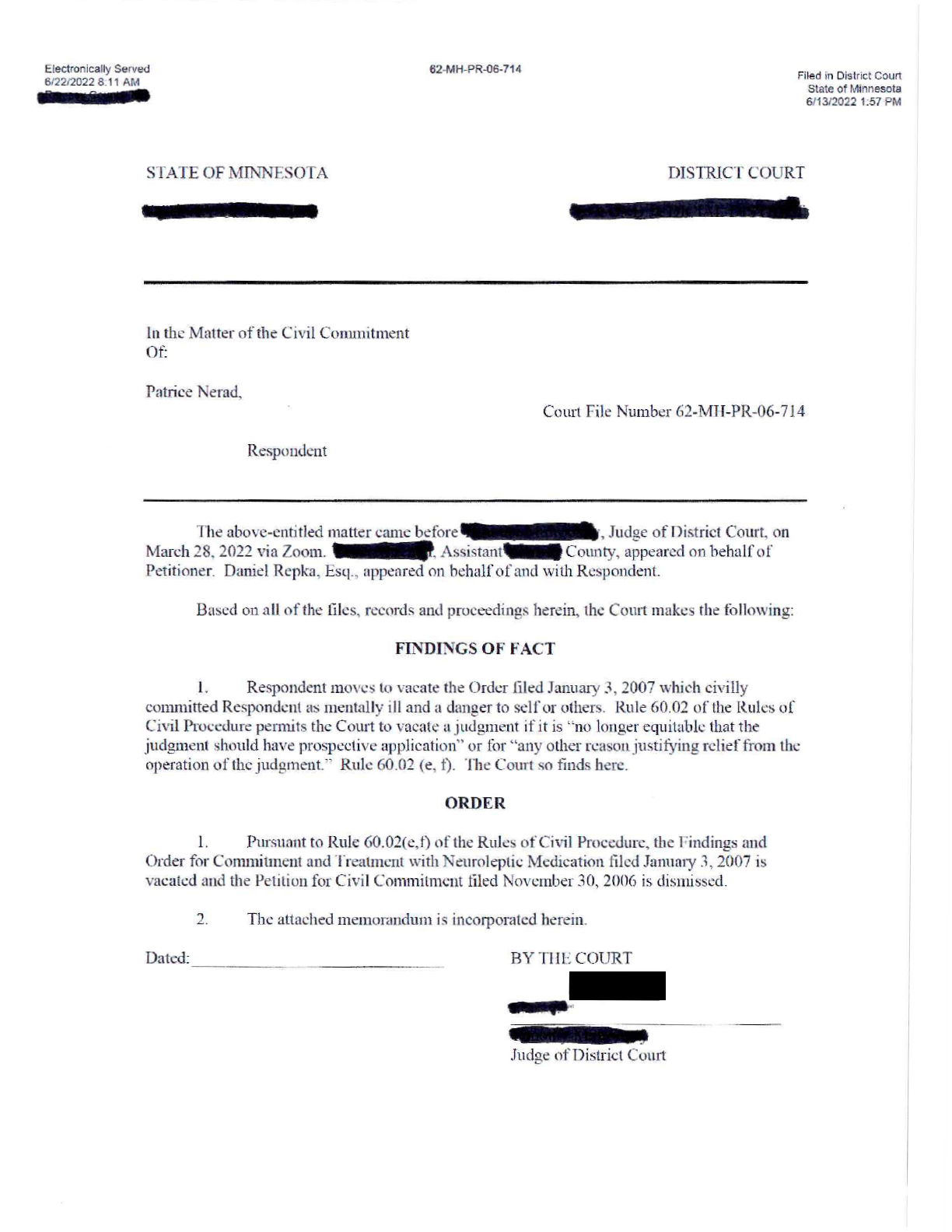
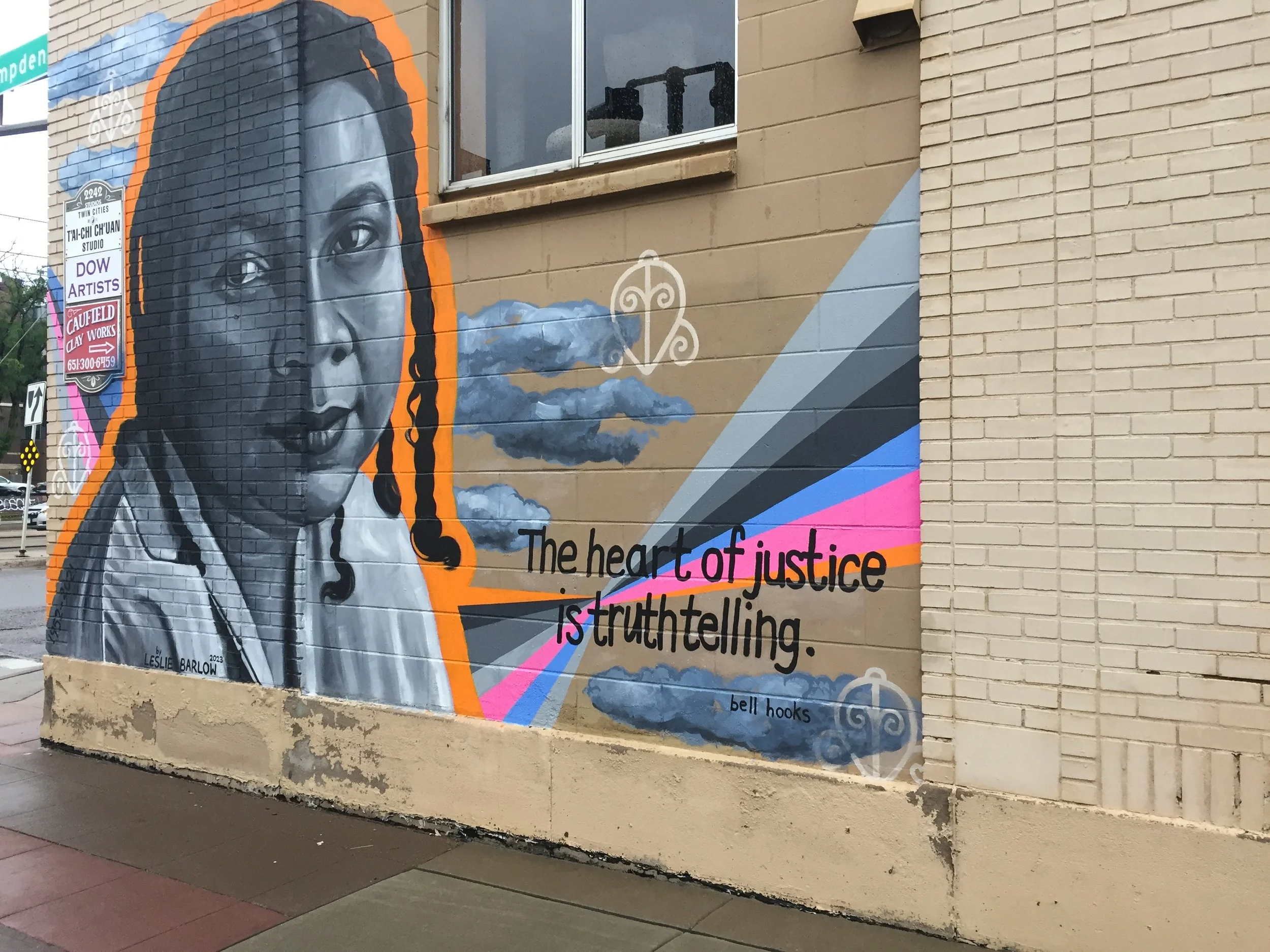
Photo: P. Nerad ©2023 Minneapolis, MN
When Legal Correction Lags Behind Restoration
One of the most enduring characteristics of institutional life is that correction rarely travels as quickly as error. A mistaken story can spread in hours. A legal correction may take years. The restoration of truth may take decades.
A judicial vacatur—known in Minnesota as a Rule 60.02 vacate—can nullify a prior legal judgment. It can declare that an earlier order no longer has legal force. Yet legal correction does not automatically restore reputation, repair relationships, revise institutional records, or remove the countless narratives that have grown from the original error. For more than twenty years I have lived in the space between legal correction and lived restoration. A court can conclude a case. A judge can vacate an order and dismiss the original petition. Yet the effects of institutional narratives often continue to ripple outward through internet searches, public memory, professional assumptions, and the quiet ways people come to know—or believe they know—another person's story.
The gap between legal correction and lived restoration is real. It is where I have been forced to live since 2006.
And it is from within this gap that much of this inquiry emerged.
2) Vacatur (Vacate- 60.02 Minnesota): Meaning and Limits
A vacatur is a legal remedy. It is not automatic narrative repair.
A judicial vacatur voids a prior judgment. In plain terms: the court withdraws the legal force of the earlier order. The judgment is undone and the original petition is dismissed.
What a Vacatur Does
A vacatur:
Nullifies the prior judgment (it no longer carries legal force as a valid court determination)
Withdraws the authority of the original order as a lawful basis for continuing legal consequences
Restores legal standing in the eyes of the court that issued the vacatur
That is significant. A vacatur is not symbolic. It is legal correction.
What a Vacatur Does Not Automatically Do
Legal correction does not automatically become institutional correction.
A vacatur does not, by itself:
Erase every institutional record that references the vacated matter
Automatically correct medical charts, administrative databases, or third-party reporting systems
Force non-judicial entities to revise narrative summaries or secondary records
Undo the reputational and practical consequences that flowed from the original action
This distinction matters because institutional systems often behave as if “record” equals “truth,” even after a court has said the legal foundation cannot stand. Once a narrative enters institutional record—through affidavits, evaluations, petitions, medical records, court filings, databases, licensing systems, or third-party reporting—it often continues to circulate long after the legal foundation supporting it has disappeared. The result is a profound paradox. The law has corrected itself. The institutional story may remain unchanged. A person may be legally restored while continuing to live inside narratives especially on the internet that no longer possess a lawful foundation.
3) Why Institutions Resist Correction
Many records are created and maintained inside self-regulating systems—medicine, psychiatry, licensing, credentialing, internal databases, or third-party platforms. These systems may be insulated from judicial correction, fragmented across agencies, or governed by policies that resist revision once an entry has been made. Over time, the story begins to authenticate itself.
Correction becomes increasingly difficult—not because truth is unavailable—but because institutions often possess stronger mechanisms for preserving continuity than for acknowledging error.
This tendency is especially pronounced within self-regulating systems—medicine, psychiatry, law, licensing, government, academia, corporations, and even religious institutions—where authority often circulates primarily within the institution itself. Yet this is never merely structural. Institutions do not preserve narratives. People do. Institutions do not write reports. People do. Institutions do not make diagnoses. People do. Institutions do not sign affidavits. People do. Institutions do not revisit errors. People choose whether to do so. Every opportunity to revisit error ultimately depends upon the judgment, character, humility, and ethical responsibility of individuals exercising authority.
Systems do not become separated from reality by themselves. They do so when individuals become more committed to preserving institutional narratives than remaining accountable to reality itself. When certainty replaces curiosity ... When procedure replaces discernment ... When institutional loyalty eclipses accountability ... When professional identity becomes more important than truthful self-correction...Relationship gradually gives way to institutional self-preservation.
4) The Burden of Correction
One of the deepest ethical questions raised by this work is not whether institutions make mistakes. They do. Human beings are fallible.
The deeper question is this: Why does the burden of correction so often rest upon the very people who have already been harmed?
Why must those who have lost liberty, reputation, livelihood, relationships, health, or years of their lives also bear the overwhelming burden of proving that institutions acted wrongly?
Why must they become investigators, legal researchers, historians, advocates, and litigants simply to recover what should never have been taken from them in the first place?
When institutional authority possesses the power to impose life-altering narratives, should it not also possess a corresponding ethical responsibility to actively investigate credible evidence of error and correct the record without requiring decades of litigation?
Or has our understanding of accountability become so dependent upon adversarial process that institutions no longer experience an affirmative ethical obligation to revisit their own decisions?
A lawsuit is an important legal mechanism. It exists because accountability sometimes requires judicial intervention. But litigation was never intended to become the primary means by which institutions discover—or acknowledge—their own mistakes. If meaningful correction occurs only after years of litigation, then something deeper has already failed. Healthy institutions should possess robust capacities for reflection, investigation, learning, and self-correction long before litigation becomes necessary. The question therefore is not simply whether an institution can successfully defend itself in court. The question is whether it possesses sufficient ethical maturity to ask: Have we gotten this wrong? And if so: What responsibility do we now bear to correct it?
5) Restoration Is More Than Legal Correction
Legal correction is necessary, but it is rarely sufficient. A court can vacate a judgment. It cannot automatically restore trust. It cannot rebuild a life. It cannot erase years of misunderstanding. It cannot restore dignity through judicial order alone.
Restoration asks different questions. How do we restore relationship between story and reality? Between institutions and the people they were created to serve? Between authority and accountability? Between power and humility? Between legal correction and ethical responsibility?
Restoration is therefore not simply a legal undertaking. It is an ethical one. It requires more than correcting documents. It requires the willingness of individuals and institutions to acknowledge error, revise understanding, and place truth above institutional self-protection.
Restoration is the work of returning relationship where separation has occurred.
6) Beyond One Case
The circumstances that brought me to this work are deeply personal. Yet the questions posed extend far beyond one person's experience. Throughout history, institutions have often demonstrated extraordinary capacity to create life-altering narratives while possessing comparatively weak mechanisms for revising them once error has been recognized.
The consequences reach far beyond psychiatry or law. They affect medicine. Education. Government. Religious institutions. Corporations. Professional organizations. Indeed, every place where authority and interpretation meet.
Whenever institutional narratives become more authoritative than reality itself, the possibility of correction begins to diminish. Whenever individuals entrusted with power cease questioning their own assumptions, the distance between story and reality grows. The question before us is therefore larger than any single legal proceeding.
How do human beings—and the institutions they create—remain accountable to reality rather than merely to the stories they have already authorized?
7) The Ethical Question Restoration Requires
Every institution makes mistakes. That is not the defining ethical question. The defining question is what happens after those mistakes become known. What obligations arise once individuals acting within institutions become aware that the factual, legal, or procedural foundations supporting an earlier decision can no longer be sustained? Does responsibility continue wherever inaccurate records, institutional narratives, professional opinions, or administrative decisions continue to rely upon conclusions that have already been shown to be unsupported?
At what point does failure to revisit known error cease to be oversight and become institutional indifference? When does protecting institutional credibility become incompatible with protecting truth? And when institutions possess elaborate mechanisms for creating life-altering narratives, but comparatively weak mechanisms for correcting them, what does that reveal about the relationship between authority, accountability, and justice?
8) The Measure of Institutional Integrity
Institutions inevitably make mistakes. Human beings are fallible. Perfection has never been the measure of justice. The true measure of institutional integrity is something far more demanding.
Can individuals entrusted with authority recognize error, acknowledge it, learn from it, and correct it before further harm occurs?
Or does institutional identity become so intertwined with prior decisions that correction itself comes to be experienced as a threat?
When preserving institutional legitimacy becomes more important than remaining accountable to reality, authority gradually separates from ethical responsibility. At that point, institutions no longer protect primarily through truth. They protect themselves.
Closing
This page is not an invitation to relitigate the past. Nor is it ultimately about one civil commitment. It is about a question every institution must eventually answer.
What is the ethical responsibility of those entrusted with power once they know—or reasonably should know—that the story upon which they have acted is no longer supported by reality?
Is justice satisfied because a legal proceeding has concluded? Or does justice continue to require correction wherever the consequences of that story continue to shape another human life? Can institutional authority remain worthy of public trust if it possesses greater capacity to create life-altering narratives than to revise them once error has been demonstrated? How do we distinguish between a conclusion that has become authoritative because it has been repeatedly cited and a conclusion that has actually been repeatedly tested against independent evidence?
The deepest measure of justice is not whether institutions possess the authority to make decisions and regurgitate the originating error.
It is whether they possess the moral courage to revisit those decisions when reality demonstrates they were wrong.
Every generation inherits the institutions created by those who came before. Every generation also inherits the responsibility to examine whether those institutions remain faithful to the realities they were created to serve. Truth has a way of returning. Sometimes quietly. Sometimes decades later. Like a river, it continues moving beneath the surface even when temporarily diverted. The question is not whether truth returns. History suggests that eventually it does. The deeper question is whether we—as individuals and as institutions—possess the humility, honesty, and moral strength to recognize it when it arrives. For without that willingness, restoration remains incomplete.
Continue the Inquiry
For articles on story, institutional narrative, relationship, due process, DSM, civil commitment, ethics, healing, restoration, and much more please visit Writings.
For the scholarly foundations underlying this work—including books, articles, human rights resources, and related research—visit The Inquiry Commons.

Photo Unsplash: Aarn Girl
A Moment for Potential Transformation
This page has explored legal correction, institutional authority, and the challenges of restoration. Before moving on, I invite you to pause—not to think first about courts or institutions, but about your own experience.
Have you ever discovered that something widely accepted was not true?
Have you ever struggled to correct a misunderstanding that seemed to take on a life of its own?
Have you ever found yourself relying on an official record without wondering how it came to be written—or whose voice might be missing?
If you hold a position of responsibility, how do you remain open to the possibility that your own understanding may be incomplete?
What practices help you remain willing to revise your conclusions when new evidence or deeper understanding emerges?
Perhaps the deepest question is not whether institutions are capable of self-correction. It is whether we, as individuals, are. Because every institution is ultimately composed of people. The restoration of relationship begins long before policies change. It begins the moment we become willing to ask, What if I have not yet seen the whole story?