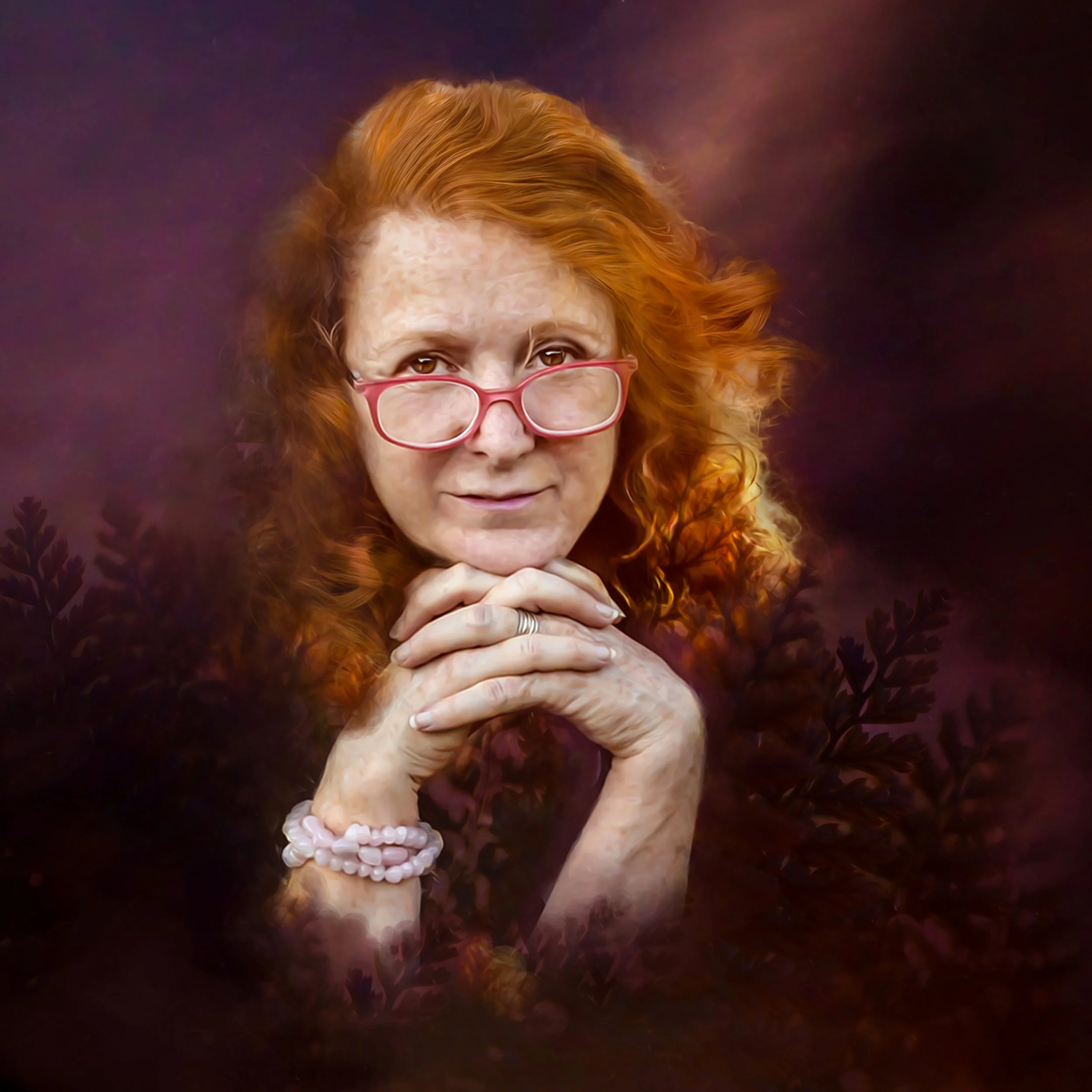
Patrice Nerad PhD

The deepest crises of our time are not merely political, legal, ecological, economic, psychological or spiritual. They are crises of relationship.
We have become separated from one another, from the living world, from our own embodied knowing, from the sacred, and from the realities that sustain life itself.
When relationship gives way to separation, our institutions begin to reflect that fragmentation. Stories become more powerful than lived experience. Categories replace persons. Procedures may become detached from the realities they were created to serve. Systems designed to protect can lose the capacity for reflection, accountability, and learning.
The Restoration of Relationship is therefore not simply a personal task. It is an ethical, institutional, ecological, and civilizational one.
It is the essential work of our time.
Some Lives Become an Inquiry
Some lives unfold according to plan. Others become an inquiry.
Mine became an inquiry that has now spanned more than four decades. It began in forests and tide pools, in science and systems thinking, and deepened through scholarship, coaching, spirituality, and an unexpected and brutal encounter with institutional power through an unwarranted and illegal civil commitment.
What followed would eventually bring together questions I had been asking throughout my life: How do we know what is true? What happens when story becomes more powerful than reality? How do institutions lose—or recover—the capacity to learn from their own errors? And what becomes possible when relationship is restored?
"An error does not become truth by reason of multiplied propagation, nor does truth become error because nobody sees it. Truth stands, even if there be no public support. It is self-sustained."
— Mahatma Gandhi, Young India, February 26, 1925.
A Note About the Public Record
Once upon a time, I had no online identity. I didn’t have Facebook, Instagram and the like nor did I have a cell phone. Moreso I lived a quiet life in Minnesota working for non-profits, volunteering and playing in my garden. Today, searching my name online quickly leads to court opinions, appellate decisions, and legal summaries spanning many years. At first glance, they may appear to tell my story.
They do not.
Legal opinions tell us what courts decided within particular proceedings, under particular procedural rules, standards of review and questions presented for decision. They are not intended to be comprehensive histories of the lives or events from which those proceedings arose, and a procedural disposition is not necessarily a determination of every or any underlying fact. And in many, if not most instances the truth based in fact never sees the light of day.
For years, it seemed I was simply involved in a succession of legal cases. Eventually I connected the dots. The cases were not the story. They were windows into a much larger inquiry.
What happens when a case is ended before facts are fully explored? How do procedural mechanisms shape the stories that become part of the public record that, in many cases, leave out critical information? What incentives encourage institutions to examine themselves—and what incentives discourage them? How do we distinguish between procedural finality and substantive understanding? And what is required to restore relationship after an institutional story has profoundly altered a human life?
Those questions became the foundation of my doctoral scholarship, my writing, and ultimately this website. And truly this is not the website I ever believed I would need to write.
This website is a larger invitation, not an attempt to relitigate past cases, by exploring what these experiences reveal about story, systems, power, healing, truth, relationship, and our collective capacity for self-correction.
AND, to understand more deeply how a person’s life can become entangled in a web so dense that it almost defies escape from its sticky grip.
Perhaps You Have Wondered …
Perhaps you have never experienced a courtroom, a hospital, or an institutional system in the way that I did. Perhaps you have wondered why institutions created to serve human beings sometimes seem to lose sight of the people before them. Or perhaps your questions have arisen elsewhere—in your family, your work, your community, your faith, or your relationship with the living world.
Or perhaps you work within one of these systems and have witnessed something you knew was wrong, yet remained silent—or found yourself expected, by virtue of your professional role, to defend practices or actions you could no longer reconcile with your own conscience. Perhaps you, too, are searching for the courage to question what you have been taught to protect, and for a way to step beyond the constraints of the system from within.
Whatever brings you here, the invitation is the same:
To pause. To wonder. To question. To listen.
Not simply to seek better answers, but to become curious about the assumptions beneath the answers we have already been given.
Inquiry begins there.
Stories are the womb of personhood. Stories can make and break us.
Stories sustain us in times of trouble and encourage us toward ends we would not otherwise envision. The more we shrink and harden our ways of telling, the more starved and constipated we become.
—J. Miller Mair, 1989
PHOTO CREDIT: Ricardo Gomez Angel
The Power of Story
We live inside stories— about health and illness, justice and authority, success and failure, who belongs and who does not. Stories shape far more than memory. They shape identity and relationship. They influence what we notice, whom we believe, what institutions recognize as legitimate, and even the futures we imagine possible.
Some stories expand our humanity. Others narrow it. Some draw us more deeply into relationship. Others separate us from one another and from the realities before us.
The work gathered here explores that threshold: the place where story meets reality, where separation becomes visible, and where another way of seeing may allow relationship to be restored.
Because every enduring transformation — every genuine act of healing — begins there.
Welcome
Whether you arrive here seeking understanding, healing, restoration, or simply a quieter place to reflect, I am grateful our paths have crossed. My hope is that these writings encourage deeper questions, gentler listening, and a renewed sense of relationship—with yourself, with others, with the living world, and with the Sacred.
May they remind us that wisdom is not found in certainty alone, but in the courage to remain open to what life continues to reveal.
Welcome.
New to this work?
Begin with START HERE, where I offer an orientation to the themes explored throughout the site.
To learn more about the journey that gave rise to this inquiry, visit ABOUT.
To explore the experience that brought questions of story, institutional authority, due process, and restoration into the center of my scholarship, visit CIVIL COMMITMENT|LEGAL and HEALING.
“Our world view and cosmology, which defines the context for everything else, is profoundly affected by the degree to which all our faculties–intellectual, imaginative, aesthetic, moral, emotional, somatic, spiritual, relational–enter the process of knowing.
How we approach ‘the other,’ and how we approach each other, will shape everything, including our own evolving self and the cosmos in which we participate.”
— Richard Tarnas, Cosmos and Psyche: Intimations of a New World View