Frequently Asked Questions
The questions gathered here offer different doorways into my life and work—through story, scholarship, lived experience, relationship, and the sacred. They are not separate inquiries, but different ways of approaching a deeper question:
How might we see more clearly, listen more deeply, and return to what is Real?
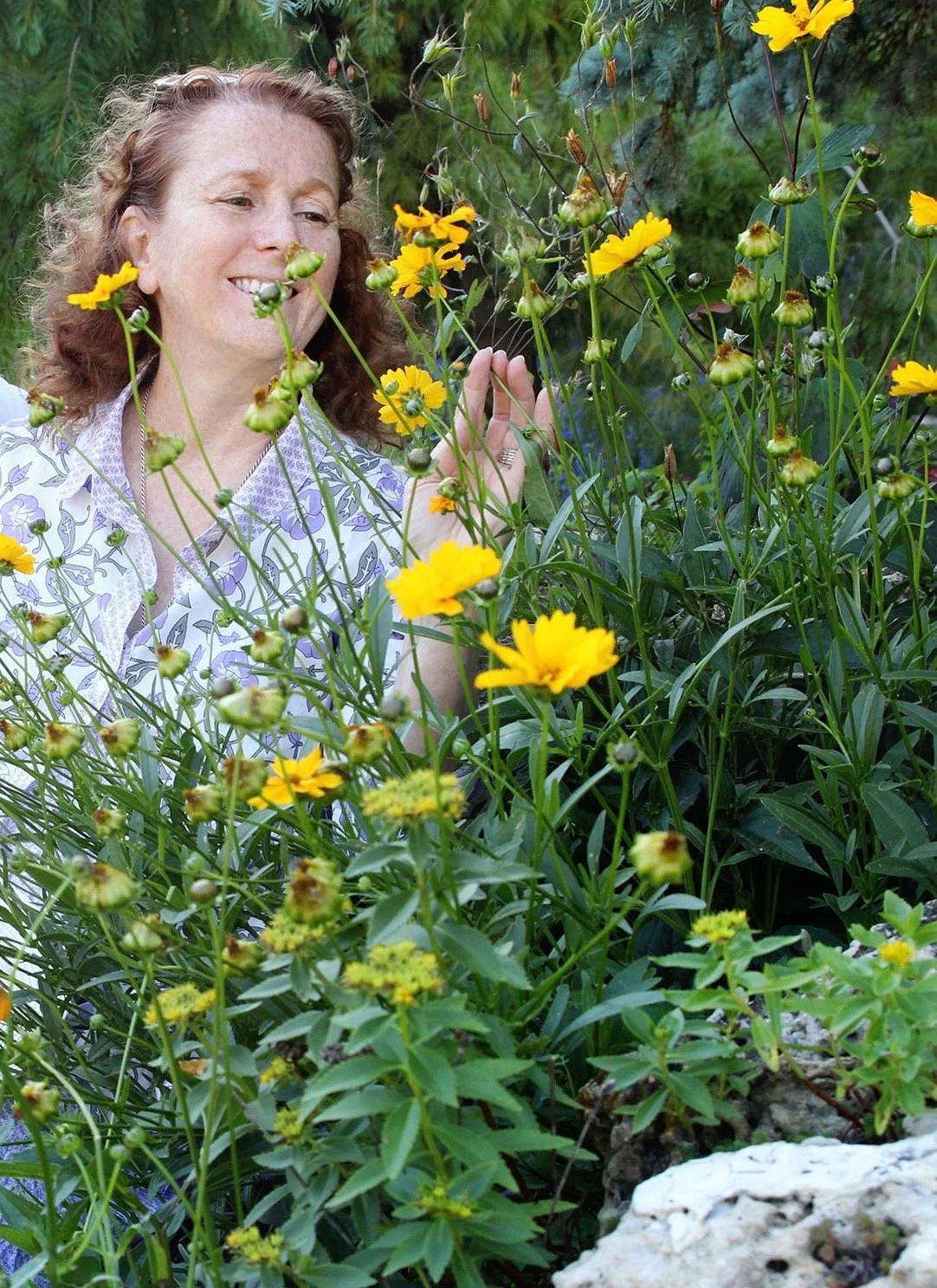
“The dance of life is the weaving of the seen with the unseen and the magical with the mundane.”
Foundations
An introduction to who I am, the meaning of Returning to the Real, the practice of witnessing, and the sacred, relational understanding that grounds my work.
-
I am a mystic, gardener, storyteller, poet, and scholar.
I have moved through the world as a granddaughter, daughter, sister, wife, friend, writer, researcher, educator, advocate, healer, and elder. These are part of my story, but none is the deepest description of who I am.
I have always been drawn toward the mystery beneath appearances—to what lies beneath the stories we tell about ourselves and one another, and to the places where the visible and invisible, the human and Divine, the life of the mind and the knowing of the heart meet.
I am also a questioner and a witness.
I question because I want to know what is true beneath what we have been taught to believe. I witness because when something real has been obscured, silenced, distorted, or forgotten, I believe there is a sacred responsibility to remain present to it.
I believe life is sacred. I believe we are fundamentally relational beings. And I believe dignity arises from the sacredness inherent in life; it is not something bestowed upon us by an institution, profession, court, government, or another human being.
Much of what wounds us—personally, relationally, collectively, and institutionally—begins when we lose the capacity to encounter what is living and instead encounter the story, category, belief, diagnosis, role, or record we have placed between us.
This is the ground beneath my writing, scholarship, healing work, spiritual inquiry, and witnessing.
-
I have long understood that there is more than one garden entrusted to our care.
There is the garden around us: our little piece of Earth, wherever we have been planted. Our homes, relationships, and communities. The soil beneath our feet, the food we grow and prepare, the water we protect, and the creatures with whom we share a place.
To garden in this sense is more than growing plants. It is entering into relationship with the living world, learning to notice, caring for what has been entrusted to us, and participating in the flourishing of life.
The way we tend anything begins with how we understand it. Our paradigms—the assumptions and ways of knowing through which we encounter the world—shape what we notice, what we value, and how we act. A garden may be understood as something to control and manage, or as a living community of relationships in which we participate.
The same is true of the human heart.
And then there is the inner garden. The heart itself must be tended.
I understand the heart as more than an emotional center. It is a root of consciousness, a place of deep knowing, and the interior ground through which the soul encounters the Divine within.
To tend the heart is not to manufacture love or perfect ourselves. It is to become attentive to what has obscured our awareness of the love, wonder, curiosity, and deep knowing already present within us.
Consider the wonder of a young child encountering the world before so many explanations have been supplied. Everything invites discovery. The child does not need to understand the world before entering into relationship with it. Yet as we grow, how much of that openness do we gradually surrender to the expectation that we must know, categorize, explain, and be certain?
Knowledge has its place. It can illuminate, deepen understanding, and open extraordinary possibilities. But when our explanations become more authoritative than what is living before us, we risk losing the very relationship through which deeper understanding becomes possible.
Perhaps tending the heart begins with recovering the courage not to know—and the willingness to encounter life again with wonder.
Healing, prayer, truthfulness, relationship, creativity, grief, courage, beauty, service, and love are all part of tending this inner garden. Sometimes tending asks us to act, to nourish, protect, or repair. At other times, it asks us to become still, to listen, to relinquish certainty, and to allow life to reveal itself.
A gardener does not command a seed to become a flower. The gardener tends the conditions in which the life already present can emerge.
And ultimately, the inner and outer gardens are not separate. What we cultivate within ourselves enters the world through how we live, speak, love, work, create, and care. How we tend the world, in turn, shapes our interior lives.
We tend the heart, and from the heart we tend the world.
-
The Real is larger than the stories we tell about reality.
Returning to the Real is a movement from abstraction toward presence, from separation toward relationship, and from forgetting toward remembrance that we belong to a living and sacred cosmos.
It is the living cosmos of which we are a part—the knowing body, the Earth beneath our feet, the particularity of place, our relationships with one another, the more-than-human world, consciousness, mystery, and the sacred presence moving within and throughout life.
We do not stand outside this living world and simply observe it.
We participate in it.
And through participation, we know.
This orientation opens more fully in Start Here and unfolds throughout Writings.
-
A witness is someone who remains present to what is real.
Witnessing is more than observing. It asks us to resist immediately reshaping what we encounter so that it fits what we already believe.
To truly witness another human being is to acknowledge there is a life before us that exceeds our interpretation of it.
It asks us to listen. It asks us to tolerate what may unsettle our assumptions. It asks us to leave room for another person's knowing and experience. And sometimes it asks us to stand beside a truth when looking away would be easier.
Witnessing is not narration. The purpose is not persuasion. It is preservation.
What we faithfully witness is more difficult to erase.
Explore On Witnessing for the fuller expression of this understanding.
-
Because something essential is lost when the person whose life is being described disappears from the telling of it.
We live surrounded by representations of other people: medical records, legal filings, diagnoses, research findings, institutional reports, professional opinions, family narratives, news stories.
Some are necessary. Some are careful and accurate. But none of them is the person.
Listening to a person's experience in their own words restores something representation alone cannot provide: relationship with the person whose life is being described.
This does not mean human memory or interpretation is infallible. It means that a person's voice is not incidental to understanding their life.
This becomes especially important wherever institutions hold the power to make decisions that profoundly affect another person's life.
There is a life before me that exceeds what I know about it.
That humility is essential to love, scholarship, healing, witnessing, and justice.
Continue into On Witnessing for more about voice, story, and the responsibility of listening.
Ideas & Inquiry
Exploring the questions that shape my scholarship and writing—how we know what we believe we know, how stories influence perception, and why relationship matters.
-
Separation from the Real is the name I eventually gave to something I had experienced, witnessed, and spent years trying to understand.
At its simplest, it describes what happens when our representations of reality—stories, theories, diagnoses, records, categories, beliefs, professional languages, and institutional narratives—become more authoritative than the living reality they were created to help us understand.
But the Real, as I use the word, is much larger than factual accuracy.
The Real is the living cosmos in which we participate. It is the knowing body, the particularity of place, relationship, Earth and the more-than-human world, consciousness and mystery, the irreducible being standing before us, and the Divine presence within and throughout life.
We need representations. The danger begins when we forget that the representation is not the living thing.
A living person becomes a patient, a diagnosis, a litigant, a risk, a case number, a problem to manage.
My experience within civil commitment brought this into extraordinary focus. I encountered a system operating from a paradigm profoundly removed from my own understanding of consciousness, the knowing body, relationship, healing, soul, and the sacred. Under ordinary circumstances, when we encounter a relationship or environment fundamentally incompatible with our understanding—or one that becomes harmful—we can leave. I could not.
Nor did speaking necessarily restore relationship. Objection, resistance, attempts to correct what was being said, or efforts to exercise agency could themselves be interpreted from within the framework being challenged.
This raised a question that became central to my work:
If every response from the living person can be absorbed into an existing interpretation, what remains capable of correcting the interpretation?
How does the Real get back into the system?
These are questions about knowing, power, relationship, law, systems, and human dignity. But beneath them lies a spiritual question:
What happens when we cease to encounter the sacred being before us?
A diagnosis may describe something.
A record may preserve something.
A theory may illuminate something.
None of them is the person.
Separation from the Real names the rupture. Returning to the Real is the work of restoration.
Explore Civil Commitment / Legal for the legal and institutional dimensions, Writings for my continuing inquiry, and The Inquiry Commons for sources and thinkers with whom this work is in conversation.
-
Story work is the practice of becoming conscious of the stories through which we experience ourselves and the world.
We carry stories about who we are, whether we are worthy of love, whom we can trust, what happened to us, what our bodies mean, what success means, what God is, what is dangerous, what is possible, and what kind of life we are allowed to live.
Story work begins when we become curious again.
Many of our most powerful stories arrive through family, culture, institutions, relationships, and experiences we seldom question.
Where did I learn this? Is it true? What actually happened? What meaning did I make from what happened? Whose voice shaped this story? What has been left out? What does this story allow me to see—and what might it prevent me from seeing?
Story work is not about replacing an unpleasant story with a prettier one. It is about loosening our attachment to stories that have become barriers between us and what is real.
Explore Writings for the ways story moves through my work and The Inquiry Commons for sources that have helped shape the inquiry.
-
Because I understand life itself as relational.
We do not become human in isolation. From our earliest moments, we come into being through relationship—with our bodies, parents and families, friends and lovers, communities, the natural world, the sacred, and the mystery we may call God.
Relationship is also where much of what remains unresolved within us becomes visible. Another person may awaken tenderness, fear, longing, anger, grief, defensiveness, desire, joy, or an old wound we thought we had left behind.
Relationship can therefore become one of our greatest spiritual teachers.
Relationship is not simply one subject within my work. It is the ground beneath it.
Explore its restorative dimensions in Healing and its many expressions throughout Writings
-
Ecosystemic thinking begins with the recognition that nothing living exists entirely by itself.
A redwood is not simply an individual tree. Its life is interwoven with soil, water, fungi, microorganisms, weather, neighboring trees, animals, fire, decay, regeneration, and generations of life extending far beyond what we can see.
To understand the redwood, we must understand relationship.
Human beings are no different. We exist within bodies, families, relationships, communities, histories, cultures, institutions, laws, economies, landscapes, belief systems, and spiritual traditions. Each influences and is influenced by the others.
But ecosystemic thinking is more than widening the frame around a problem. It changes our understanding of the knower.
We are not standing outside the ecosystem observing it. We are inside it.
We participate in what we seek to understand.
If life is fundamentally relational, then the health of the part and the health of the whole belong to one another.
We are participants in a living cosmos, not spectators standing outside it.
Explore these ideas further in Writings, including my reflections on place, and visit The Inquiry Commons for writers and sources that deepen this way of seeing.
-
My life has unfolded among worlds that our culture often places in separate rooms: science and spirituality, intellect and intuition, scholarship and lived experience, psychology and mysticism, law and the human heart.
I have never experienced those boundaries as absolute.
My early work in the neurobiology of learning awakened questions about perception, cognition, and how human beings construct meaning. Later work in education, organizational life, coaching, shadow work, healing, spirituality, and transformative studies widened those questions.
Over time, I became less interested simply in what we know and increasingly interested in how we know.
How does a belief become certainty? How does a story become reality? What does the body know? What does sustained relationship with a person or place teach us? How do institutions determine what counts as legitimate knowledge? And how do we recognize when the framework through which we are looking has itself become part of the problem?
The influences that have shaped me are not only intellectual.
I have studied Greek mythology and religion, psychology and consciousness, science and systems, law and transformative studies. I studied religion in Austria while living in a castle, encountering another landscape, culture, and history through the places in which they had actually unfolded.
But some of my deepest teachers have never appeared on a syllabus.
I have traveled extensively and camped across much of the United States and Canada. I have slept beneath desert skies holding more stars than one can imagine and watched those seemingly barren landscapes respond to the slightest rain, erupting into color and bloom. I have stood beneath mountain peaks rising into the atmosphere where eagles and condors soar. I have walked among ancient redwoods—trees far older than I am, standing wise and solemn like sentinels within a living community.
Those places taught me something about scale, belonging, time, resilience, relationship, and the intelligence of the living world that could never have been learned from books alone.
Caregiving taught me differently. I helped care for my grandparents and for my sister before she died. Love, aging, illness, grief, death, and the privilege and difficulty of accompanying another human being toward the end of life became teachers of their own.
Public life taught me as well. I worked in research, education, nonprofit and organizational settings, coaching and advocacy. I helped work toward passage of Minnesota's landmark law protecting access to unlicensed complementary and alternative health-care practitioners—work that brought questions of healing, autonomy, choice, professional authority, and the right of people to participate in decisions about their own care into the public sphere.
And then there were experiences I would never have chosen.
Mysticism taught me that not everything worth knowing can be reduced to what can be measured. Poetry taught me that language can point toward realities it cannot contain. Scholarship taught me discipline. Science taught me to question. Caregiving taught me presence. Grief taught me impermanence. Travel taught me scale. The Earth taught me relationship. Place taught me belonging. Advocacy taught me that structures can change. And experience taught me to look again.
The thinkers and traditions that accompany my work matter deeply. But they enter into conversation with a life already being taught by body, heart, relationship, Earth, mystery, loss, beauty, and the sacred.
Knowing, for me, has never belonged to the intellect alone.
Visit The Inquiry Commons for the books, scholarship, thinkers, and other sources that have informed and accompanied this work.
Experience & Meaning
Reflections on the experiences that have shaped my inquiry, what they have revealed about human dignity and institutional systems, and what I hope this work may leave for others.
-
My personal experience is not one experience. The inquiry that became my doctoral research was shaped by a lifetime of scholarship, relationships, care, advocacy, the natural world, and the sacred.
Long before civil commitment entered my life, I had already traveled widely, studied and taught across disciplines, cared for people I loved, and advocated for freedom in health care. Those experiences shaped my understanding of the human being.
My world was not small.
Then came an experience that made my world very small.
My involuntary civil commitment became significant not because it was the beginning of my inquiry or the defining experience of my life, but because it removed something fundamental: my autonomy and my voice, while my veracity—my truthfulness and credibility as a witness to my own life—was continually called into question.
I encountered a system whose understanding of the human being, healing, consciousness, body, and relationship was profoundly removed from my own. Under ordinary circumstances, I could have left. I could not.
What followed did not end when the doors opened. The consequences entered my reputation and public identity, and the effort to understand and correct what had occurred consumed a long period of my life.
That experience eventually became the focus of my doctoral research because it brought questions I had already been asking into an extraordinarily concentrated form.
How do we know what we believe we know? What happens when an interpretation becomes a record and the record becomes more authoritative than the person? What happens when a system encounters its category rather than the living being? How does a person correct a story once institutions have begun repeating it? How does a system recognize that its own framework may be preventing it from seeing what is actually before it? And what happens when the person subjected to that framework cannot simply walk away?
My lived experience did not replace scholarship.
It demanded scholarship.
But the scholarship grew from a life much larger than the event being studied.
That distinction matters to me.
The civil commitment system reduced an expansive human life to a remarkably narrow story. Much of the work that followed has involved understanding how that happened and reclaiming what no institutional record could ever contain.
My world was not small. But they made it small.
The work of restoration has been, in part, the work of opening it again.
Explore Civil Commitment / Legal for the particular history and legal questions, and Writings for the larger life and inquiry from which that work emerged.
-
Because a record is not the event, and it is certainly not the life.
A record is a representation created for a particular purpose. Someone decides what to notice, what to ask, what to include, what to leave out, what language to use, and how to characterize what occurred.
That necessarily makes the frame smaller than the life.
No institutional record could have contained the deserts I had crossed, the redwoods beneath which I had stood, the people I had loved and cared for, the scholarship I had pursued, the work I had done, the legislation I had helped advance, the spiritual life I had cultivated, or the countless experiences through which I had come to know myself and the world.
Yet a few words entered into a record can become extraordinarily consequential.
Once recorded, they acquire authority. A later reader may assume that what appears there was investigated or verified. One document repeats another. Another professional relies upon both. A statement moves forward, increasingly separated from the circumstances in which it first arose.
Eventually repetition can begin to resemble corroboration.
Meanwhile, the human being whose life is being described may be saying:
That is not what happened. That is not who I am.
This is one reason witnessing matters so deeply to me.
Records matter. Documentation matters. Evidence matters.
But responsible systems must retain the capacity to distinguish between a representation of reality and reality itself.
They must remain capable of returning to the source, examining contradictions, correcting error, and hearing the person whose life the record purports to describe.
The same principle operates outside institutions. We can do this to one another in relationships. We decide who someone is and gradually begin encountering our story about that person rather than the person themselves.
At every scale, the invitation is the same:
Look again.
A record may contain information about a life. It can never contain the life.
Explore On Witnessing for the deeper question of voice and Civil Commitment / Legal for the consequences records can carry within coercive systems.
-
Because something needs to drastically and radically change with this system.
My life had been moving toward the sacred, healing, relationship, consciousness, the natural world, writing, teaching, and the questions that arise when we listen deeply to the heart.
Then an experience I did not choose demanded my attention. I never imagined that it could consume 20+ years of my life to bring accountability into a system that refuses to think critically or engage in conversation.
My involuntary civil commitment did not end when the doors opened. What had been written and done followed me into the world, affecting my reputation and my life. Trying to understand what had happened, correct what was false, and find meaningful accountability drew me increasingly into statutes, records, hearings, oversight systems, courts, professional authority, and the architecture of civil commitment itself.
I did not choose this as my life's work. But once I had seen what I had seen, I could not simply unsee it.
And this work is no longer only about what happened to me.
I want to leave a trail for the person who may someday find themselves where I was.
I want that person, their family, their attorney, the judge before whom they appear, and the professionals entrusted with their care to be able to understand what the law requires, why those protections exist, where the process can fail, and what must happen when it does.
Minnesota has changed its civil commitment system before. The movement from Chapter 253A to Chapter 253B came with stronger protections for people whose liberty was at risk. That history matters. It reminds us that civil commitment law is not fixed and that people before us were willing to recognize where greater protection was necessary.
But protections written into law are only meaningful when they are followed.
The work before us now is to close the distance between the protections Minnesota promises and what actually happens to the person moving through the system.
And when those protections are violated, remedy must be meaningful and timely. A safeguard intended to protect a person's liberty or bodily autonomy cannot fulfill its purpose if the only possibility of correction comes years after the liberty has been taken, the body has been subjected to unwanted intervention, the record has traveled outward, and the consequences have entered the person's life.
There must be a way to stop, look again, correct false or unverified information, enforce the protections already in law, and provide immediate remedy when those protections fail.
That requires more than another place to complain after the fact.
It requires accountability within the process itself.
My hope is that this work helps change the system and leaves a trail for others: documentation, legal explanation, questions about authority and accountability, and markers along a road I once had to travel without a map.
I cannot reclaim the years this work required of my life. But I can try to ensure that what those years taught me does not end with me.
If this work helps another person understand their rights, an attorney recognize what must be challenged, a judge ask one more question, or a professional question an unexamined story, it has moved beyond my own experience toward meaningful reform.
And having traveled it, I want to leave the path clearer for those who may come after me—and help change the system so fewer people ever have to travel it at all.
Explore Civil Commitment / Legal for the law, history, rights, resources, and continuing work toward change.
-
I have learned that systems reveal themselves most clearly at the point where someone needs them to correct themselves.
It is relatively easy to create a safeguard on paper.
Laws can promise rights. Institutions can create grievance procedures. Governments can establish review bodies, licensing boards, ombudsman offices, complaint processes, professional standards, and courts.
The architecture can look beautiful.
The more difficult question is:
What happens when a human being actually needs it?
A right becomes meaningful only when someone honors it.
A place to complain is not necessarily a place capable of stopping harm.
An investigation is not the same as correction.
A finding is not the same as remedy.
And the existence of an oversight structure does not necessarily mean that meaningful accountability will follow.
I have also learned how easily responsibility can become fragmented.
One person performs one task. Another relies upon what came before. Another processes the next step. Everyone may fulfill some narrow institutional function while no one remains responsible for seeing the whole.
Yet the person moving through the system experiences the accumulated consequence of all of it.
This is why I increasingly think in terms of stewardship.
Authority is entrusted power.
Whether one is a physician, attorney, judge, researcher, teacher, therapist, public official, minister, or institutional decision-maker, something has been placed in one's care.
The question cannot simply be: Did I complete the task assigned to me?
It must also be:
What happened to the human being entrusted to this process?
Complex systems need procedures. Law needs procedure. Due process itself is a safeguard.
But procedure must remain connected to purpose.
A trustworthy system must remain capable of revisiting its own conclusions when reality contradicts the story it has constructed.
Explore Civil Commitment / Legal for the legal and institutional dimensions of these questions and Writings for their wider implications.
-
Because beneath all my work is the conviction that life is sacred.
Dignity does not originate in law.
A legislature does not create it. A court does not bestow it. A physician does not determine it. An institution cannot grant it.
Law can recognize dignity. Law can protect dignity. Human beings and institutions can honor it—or violate it. But they do not create it.
Dignity belongs to the person because life itself is sacred.
This is fundamentally a relational understanding.
To recognize another person's dignity requires that we remain capable of encountering them—not merely our interpretation of them.
No diagnosis, legal designation, professional opinion, record, role, wound, mistake, identity, or story can contain the entirety of another human being.
Voice matters for the same reason.
Voice is more than being permitted to speak. Meaningful voice requires the possibility of being heard—of what a person says being capable of entering and changing the understanding of those listening.
Belonging matters because we are relational beings.
To belong does not mean becoming identical to those around us or surrendering our difference in exchange for acceptance. True belonging allows us to remain within the human community while retaining the integrity of who we are.
Systems have difficulty with all of this because systems necessarily classify, document, standardize, and decide.
A system cannot experience the sacredness of the human being standing before it.
People must bring that recognition into the system.
When they do not, the person can disappear behind the category. A record can become more authoritative than a voice. Procedure can replace relationship. A human being can become an object of decision rather than a participant in their own life.
Before someone is a patient, litigant, client, diagnosis, case number, citizen, professional, problem, or category of any kind, there is a sacred human being before us.
Much of my work returns to this question:
Can we learn to meet one another at the level of the heart, where the other is no longer an object to be interpreted, but a life to be encountered?
Explore On Witnessing for the relationship between voice and presence, and Healing for the work of returning to relationship with ourselves, one another, and the sacred.
-
Perhaps, most of all, remembrance.
That we belong to something larger than ourselves.
That we are not separate from one another.
That we are not separate from Earth.
That the body possesses ways of knowing we have often been taught to distrust.
That a place becomes known differently through dwelling, tending, attention, responsibility, and love.
That the heart is more than the seat of emotion; it is a root of consciousness and a place through which the soul encounters the Divine within.
That our stories matter enormously—and none of them is large enough to contain the whole of reality.
That another human being will always exceed our interpretation of them.
That dignity is inherent in the sacredness of life.
That relationship requires presence, humility, listening, reciprocity, and the freedom to say no.
That healing cannot always be imposed or managed. Often it must be tended.
That what we cultivate within ourselves eventually enters the world around us.
And that how we tend the world around us eventually enters us.
I hope my work encourages people to question—not cynically, but deeply.
Is this true? How do I know? What am I not seeing? Whose voice is missing? What does my body know? What has this place taught me? What story have I mistaken for reality? What is asking to be tended? Where have I become separated from myself, another person, Earth, or the sacred?
And perhaps:
What becomes possible if I come back into relationship with what is actually here?
I do not believe our task is to construct a perfect world or finally arrive at a story capable of explaining everything.
The Real will always be larger than our stories.
Our task may be something more humble and more sacred: to become attentive participants in the life we have been given; to tend our little piece of Earth; to tend the heart; to protect what is vulnerable; to question what has become too certain; to witness what must not be forgotten; to repair what we can; and to leave behind conditions in which life can continue to flourish.
This is why I believe another story is possible.
Not because we can simply invent a better one, but because when we return to what is real, the story itself can change.
Again and again, the movement is the same:
from separation to relationship,
from abstraction to presence,
from silencing to voice,
from wounding toward restoration,
from forgetting toward remembrance,
and from the story mistaken for reality to the living, sacred Real.Perhaps that is what I hope to leave behind:
an invitation to tend what is living, listen for what is true, and remember deeply that beneath all our stories and separations, love is the ground upon which we stand—for when we come to know life as sacred, we come home again to love.